
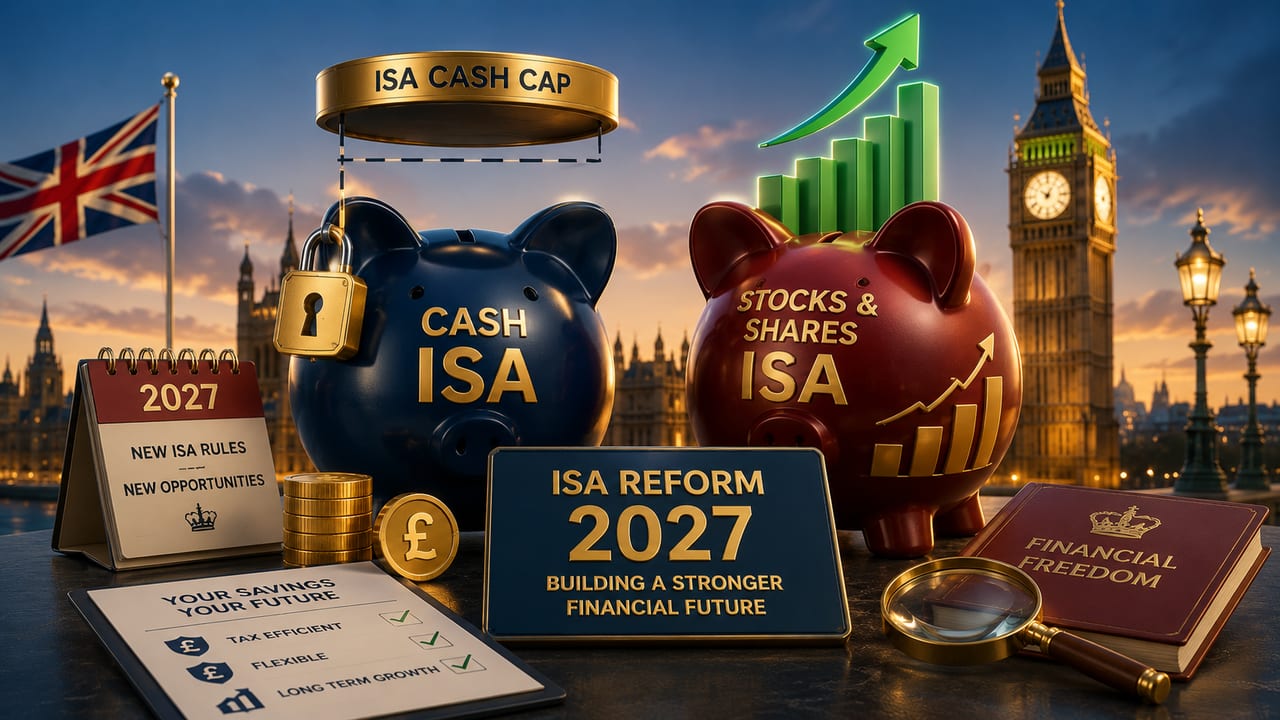
Overview of the UK 2027 Individual Savings Account (ISA) Reforms
In the Autumn Budget 2025, the UK Government announced landmark changes to the Individual Savings Account (ISA) framework, starting 6 April 2027. These changes represent a major policy shift intended to incentivize retail investment in UK markets, support equities, and discourage large cash reserves from lying dormant in savings wrappers.
These reforms aim to encourage retail investment and reduce cash hoarding. The key changes are:
- Cash ISA Cap Cut: The annual subscription limit for Cash ISAs is reduced from £20,000 to £12,000 for individuals aged 65 and under.
- Total Allowance Stays at £20,000: The overall annual ISA allowance remains £20,000. The remaining £8,000 must be allocated to non-cash ISAs to stay tax-free.
- 22% Tax on Cash Interest in Non-Cash ISAs: A flat 22% tax charge will apply to interest earned on cash held inside Stocks & Shares or Innovative Finance ISAs.
- Exemption for Over-65s: Savers aged 66 and older can continue to save up to £20,000 in Cash ISAs, recognizing that older cohorts rely heavily on cash-based savings for retirement security.
- Lifetime ISA Phase-Out: The LISA will be phased out and replaced by a new "First-Time Buyer ISA" (consultation starting early 2026).
Because these reforms introduce strict limits on cash preservation, it is essential for UK savers to understand how the new caps function and how to restructure their savings portfolios to minimize interest tax drag.
Important
To model how these caps impact your long-term savings growth, use the Cash ISA 2027 Cap Impact Calculator.
1. The Cash ISA Cap: What it Means for Savers
Starting in April 2027, if you are under 65, you can only put up to £1,000 per month (£12,000 per year) into a Cash ISA. This is a significant reduction from the historical £20,000 cap, limiting the ability to shield cash deposits from taxation.
If you want to save the full £20,000 annual ISA allowance, you must put the remaining £8,000 into a Stocks & Shares ISA (investing in stocks, bonds, or mutual funds) or an Innovative Finance ISA. This forces savers to take on market risk if they wish to keep their entire annual ISA allocation tax-free.
If you choose not to invest in Stocks & Shares and instead place the remaining £8,000 in a standard taxable savings account, the interest earned will be subject to income tax based on your tax band (22% for Basic, 42% for Higher, and 47% for Additional rate taxpayers) after you exceed your Personal Savings Allowance (£1,000 for basic rate taxpayers, £500 for higher rate taxpayers, and £0 for additional rate taxpayers).
The Cost of Taxable Interest Compounding
If you save the maximum £20,000 allowance annually at an average 4.5% interest rate, having to place £8,000 of it in a taxable account rather than a tax-free Cash ISA creates a significant compounding drag over time.
- For a Higher Rate (42%) taxpayer, the interest tax reduces their net yield on the taxable portion to 2.61%.
- Over 10 years, this results in a loss of over £8,400 in interest compared to old rules.
- Over 30 years, the total compounding wealth loss scales to a massive £116,500!
This highlights how tax drag erodes wealth over long horizons, reinforcing the need to transition excess savings into tax-sheltered equity vehicles.
Tip
To understand the differences between the savings routes under the new guidelines, read our Stocks & Shares ISA vs Cash ISA Comparison.
2. The 22% Tax Charge on Cash in Stocks & Shares ISAs
Previously, some savers bypassed the risk of the stock market by keeping their Stocks & Shares ISAs entirely in cash or cash-like instruments, enjoying tax-free cash interest inside the investment wrapper. This strategy allowed individuals to hold cash waiting for market opportunities without paying interest taxes.
From April 2027, the government will close this loophole. A flat 22% tax charge will be levied on any interest paid on cash held within Stocks & Shares or Innovative Finance ISAs. This tax is designed to ensure that Stocks & Shares wrappers are used for active market investing rather than as proxy Cash ISAs.
This tax is calculated and paid directly to HMRC by the ISA manager (the bank or investment platform), so individual savers do not need to report it on their self-assessments. However, it severely penalizes holding cash uninvested inside investment accounts, forcing savers to deploy cash into equities, bonds, or short-term gilts promptly to avoid the tax charge.
3. What Should UK Savers Do Now?
To prepare for the April 2027 rules, consider these strategies:
- Max Cash ISAs Today: The new caps are not retrospective. Any funds you deposit inside a Cash ISA under the current £20,000 cap before April 2027 will remain 100% tax-free, creating a powerful incentive to maximize contributions in the transition years.
- Transition to Stocks & Shares: Learn how to invest the remaining £8,000 allowance into low-cost, diversified index funds inside a Stocks & Shares ISA rather than leaving it in cash or taxable accounts. This is key to protecting your long-term compounding growth from tax drag.
- Watch the First-Time Buyer ISA: If you are planning to buy a house, keep an eye on the consultation results for the upcoming First-Time Buyer ISA to optimize your government deposit bonuses.
- Apportion Contributions Wisely: Structure your monthly contributions so that you hit the £1,200 Cash ISA monthly average limit while directing any surplus savings toward Stocks & Shares to maintain tax efficiency.