
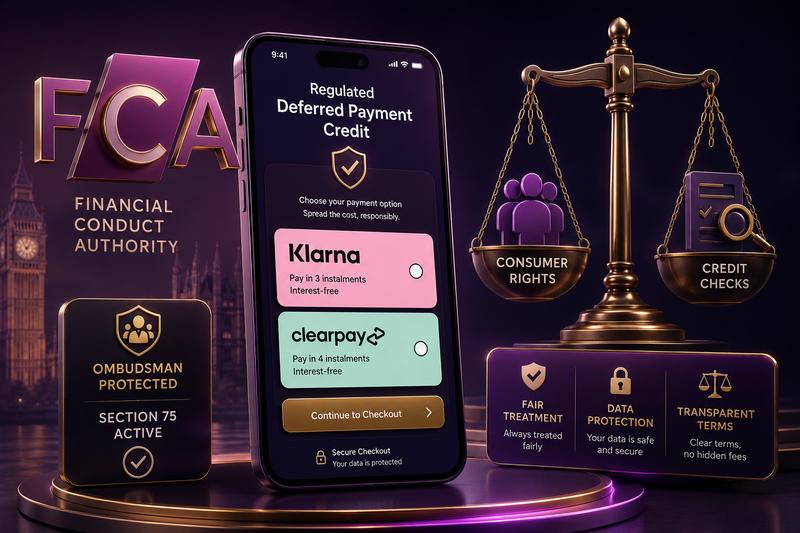
Introduction: The End of Unregulated Buy Now, Pay Later in the UK in 2026
For nearly a decade, Buy Now, Pay Later (BNPL) was the fastest-growing sector of the UK consumer credit market. Characterized by interest-free installments, rapid checkouts, and minimal barriers, services like Klarna, Clearpay, and PayPal Pay in 3 became a staple for millions of British shoppers. However, this explosive growth occurred entirely outside the jurisdiction of UK financial regulators, creating a major regulatory blind spot. This loophole officially closes on July 15, 2026, as the UK Financial Conduct Authority (FCA) brings all BNPL providers under its strict regulatory framework, reclassifying these products as Deferred Payment Credit (DPC).
Previously, unregulated BNPL lenders were not legally required to assess a shopper's ability to repay before extending credit. Late fees were often hidden in fine print, marketing materials bypassed standard advertising safety rules, and consumers had no recourse to independent dispute resolution when things went wrong. Under the new 2026 DPC framework, BNPL providers must comply with the FCA's strict Consumer Duty regulations. Lenders must conduct mandatory creditworthiness checks, cap compound late fees, disclose all charges upfront, and grant consumers full access to the Financial Ombudsman Service (FOS) and Section 75 joint refund protections.
This comprehensive guide details the shift to regulated DPC, explores your new consumer rights, compares late fee policies and math across major providers, explains how BNPL affects your credit score, and outlines the step-by-step process for resolving credit disputes.
Summary of the UK 2026 BNPL Regulatory Shift
| Feature | Legacy Unregulated BNPL (Pre-July 15, 2026) | New Regulated DPC (Post-July 15, 2026) | Legislative Authority |
|---|---|---|---|
| Legal Classification | Unregulated payment agreement | Regulated Deferred Payment Credit (DPC) | Consumer Credit Act 1974 |
| Financial Ombudsman (FOS) | No access (limited to internal support) | Full access (free independent resolution) | FCA Dispute Resolution (DISP) |
| Affordability Checks | Optional soft searches only | Mandatory creditworthiness assessment | FCA CONC Sourcebook |
| Section 75 Protection | None (no joint lender liability) | Applicable for purchases £100 to £30,000 | Consumer Credit Act Section 75 |
| Credit Reporting | Inconsistent voluntary reporting | Mandatory reporting to Experian/Equifax/TransUnion | FCA Data Sharing Rules |
Important
The new regulations only apply to DPC agreements entered into on or after July 15, 2026. For a complete simulation of your credit rights and late fee exposures, use our UK BNPL Consumer Rights Simulator.
1. Regulated Deferred Payment Credit (DPC): The Legal Shift
The statutory transition of BNPL into Deferred Payment Credit (DPC) is governed by amendments to the Consumer Credit Act 1974. By defining BNPL as a regulated credit agreement, the government has subjected lenders to the same compliance standards as credit card companies and personal loan providers.
Core Regulatory Pillars:
- The Consumer Duty Mandate: Under the FCA's Consumer Duty, lenders must act to deliver good outcomes for retail customers. They must prove that their products are fit for purpose, offer fair value, and do not exploit vulnerable consumers.
- Financial Promotion Rules: All marketing materials, checkout screens, and app notifications promoting BNPL must be clear, fair, and not misleading. Warning banners highlighting the risk of debt and credit score damage must be prominently displayed.
- Treatment of Vulnerable Customers: Lenders must implement systems to identify customers experiencing financial distress and offer tailored support, such as interest-free payment freezes, rather than immediately handing delinquent accounts to debt collection agencies.
2. Key Consumer Protections: Section 75 and FOS Access
Reclassifying BNPL as regulated DPC introduces two powerful statutory shields for British consumers: Section 75 and FOS access.
Section 75 Joint Refund Liability
Under Section 75 of the Consumer Credit Act 1974, when you purchase goods or services priced between £100 and £30,000 using a regulated credit agreement (which now includes DPC), the lender shares joint liability with the merchant. This means that if the merchant fails to deliver the goods, goes out of business, or provides faulty merchandise, you have the legal right to claim a full refund directly from the BNPL provider if the merchant refuses to cooperate.
Financial Ombudsman Service (FOS) Access
If you have a dispute with a BNPL provider—such as disputed late fees, billing errors, or fraud—you must first submit a formal complaint to the lender. If the lender fails to resolve the complaint within 8 weeks, or if you reject their final response, you can escalate the case to the Financial Ombudsman Service for free. The FOS has the authority to review the case independently and issue a legally binding decision, including ordering the lender to refund fees or pay compensation.
3. Late Fee Comparison and Calculations across Lenders
While regulated BNPL remains interest-free, missing scheduled payments triggers late fees. Under the new FCA guidelines, late fees must be proportionate, capped, and clearly disclosed.
Late Fee Policies for Major Lenders:
- Klarna: Late fee is £5.00 per missed installment. Fees are capped at 25% of the purchase value or £10.00 total per purchase. Klarna offers a 7-day grace period after the missed payment date before the fee is assessed.
- Clearpay: Late fee is £6.00 per missed installment. Total late fees are capped at 25% of the purchase price. Clearpay offers a 24-hour grace period.
- PayPal Pay in 3: Late fee is £6.00 per missed installment. Total late fees are capped at 25% of the purchase value. PayPal applies a standard proportionate assessment before lending. Note: Laybuy, a former BNPL provider, ceased operations and entered administration in June 2024 and is no longer active in the UK market.
4. Worked Math Examples: 2 Spending Profiles
Let's calculate the exact late fees and consumer rights under two different retail spending scenarios.
Scenario 1: Small Clothing Purchase (James - Clearpay)
James purchases clothes for £80 using Clearpay at checkout, split into 4 equal fortnightly installments of £20 each. James pays the first installment at checkout, but due to a banking error, he misses the remaining 3 scheduled payments.
- Scheduled Payments: 4 payments of £20.
- Missed Payments: 3 installments.
- Base Late Fee Accrual: 3 missed payments * £6.00 per installment = £18.00.
- Clearpay Regulatory Cap Check: Clearpay caps total late fees at 25% of the total purchase price. For James's purchase:
Late Fee Cap = £80.00 × 25% = £20.00Since James's accrued fee of £18.00 is below the £20.00 cap, he is billed the full £18.00 in late fees.
- Total Repayment Obligation: £80.00 (principal) + £18.00 (late fees) = £98.00.
Scenario 2: High-Value Tech Purchase (Emily - Klarna)
Emily purchases an iPad for £400 using Klarna, split into 3 interest-free installments. She pays the first installment at checkout, but loses her job and misses the next two payments. Klarna attempts to collect, but both payments remain unpaid for over 30 days.
- Scheduled Payments: 3 payments of £133.33.
- Missed Payments: 2 installments.
- Base Late Fee Accrual: 2 missed payments * £5.00 = £10.00.
- Klarna Regulatory Cap Check: Klarna caps total late fees at the lesser of 25% of the purchase value (£100) or £10.00. Since £10.00 is the hard cap, Emily's total late fees are capped flat at £10.00.
- Section 75 Qualification: Because the iPad was priced at £400 (exceeding the £100 statutory threshold), Emily's purchase qualifies for Section 75 protection. If the iPad arrives damaged and the merchant refuses to replace it, Emily can stop her payments and claim a full refund of her paid installments from Klarna.
5. Credit Score Impact under the DPC Framework
Under regulated DPC, BNPL transactions are fully integrated into your credit history. Lenders share data with the UK's three major Credit Reference Agencies (CRAs): Experian, Equifax, and TransUnion.
- Credit Application Searches: When you select BNPL at checkout, lenders run credit checks. While most standard purchases trigger a "soft" search (which is visible only to you and does not impact your credit score), higher-value installment plans may trigger a "hard" search, which is visible to other lenders and can temporarily lower your credit score.
- Payment History Reporting: Every payment you make on time is reported to the CRAs, helping you build a positive credit history. However, any payment missed by more than 30 days is reported as a delinquency. This will appear on your credit file for six years, making it more difficult and expensive to secure mortgages, car finance, or credit cards in the future.
6. Step-by-Step Guide to Resolving a BNPL Dispute
If you believe a BNPL provider has incorrectly charged you late fees, or failed to honor a refund, follow this procedure to resolve the issue:
- File an Official Complaint with the Lender: Send a formal complaint via email or through the provider's official customer portal. Explain the billing error clearly and demand a resolution. Lenders are required under FCA rules to acknowledge your complaint.
- Keep the Account Current: To protect your credit score from delinquency marks while the dispute is investigated, continue making payments if possible, or request an official payment freeze from the lender.
- Await the 8-Week Response Window: Under FCA guidelines, the lender has up to 8 weeks to investigate your complaint and issue a "Final Response Letter" detailing their decision.
- Escalate to the Financial Ombudsman: If you do not receive a final response within 8 weeks, or if you reject the lender's final resolution, file a dispute online at financial-ombudsman.org.uk. Provide copies of your purchase receipt, communication records with the merchant and lender, and your payment transcripts.
- Ombudsman Review: An Ombudsman investigator will review the case and issue a decision. If accepted by you, the decision becomes legally binding on the BNPL provider.